

What’s the Best Age to Start a Dog on Scent Work? A Guide to Mantrailing for Puppies
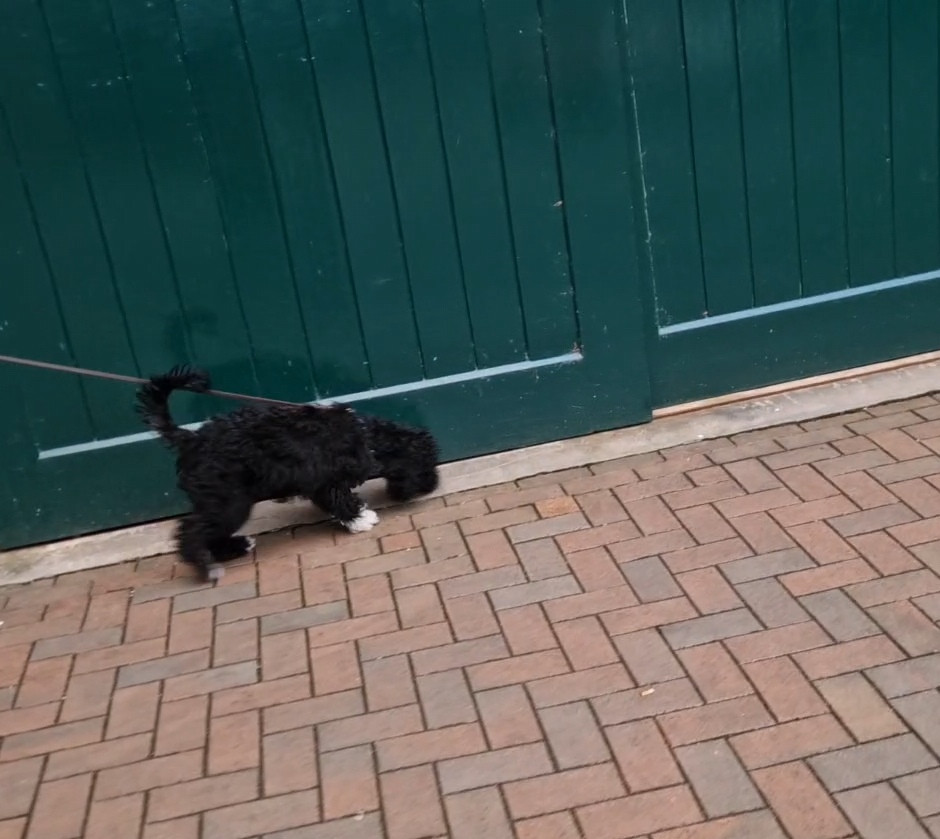
If you’ve ever watched a mantrailing dog in action — nose to the ground, tail wagging slowly, completely absorbed in following a scent — you’ll know it’s one of the most rewarding activities for both dog and owner. But when is the right time to start? Can puppies learn scent work, or should you wait until they’re older? And what does the science say?
As a mantrailing (trailing) instructor based in the UK, I often get asked these questions by enthusiastic puppy owners. The short answer? You can start scent work with puppies as young as 8–12 weeks old, but in the UK they can safely walk on the ground 1–2 weeks after their second vaccination, typically around 12–14 weeks of age, so this is the earliest they can start mantrailing in real-world scenarios.
Also, there are nuances, and this guide will break down the evidence, pros and cons, breed differences, and how to manage distractions.
The Science: How Early Can Dogs Learn Scent Work?
Dogs have an extraordinary sense of smell — and whilst opinions vary from 10,000 up to 100,000 times more sensitive than humans (Walker et al., 2006, their olfactory receptors are fully developed at birth, and they begin sniffing and exploring their environment immediately.
Research shows that even newborn puppies can detect and differentiate scents, though their ability to track a specific scent improves with age and training (Lord et al., 2015).
A 2019 study published in Applied Animal Behaviour Science found that puppies as young as 8 weeks old could successfully participate in scent detection tasks when the tasks were short, positive, and reward-based (Fenzi et al., 2019).
The key? Keeping sessions short (5–10 minutes), fun, and free from pressure.

Why start young?
Mental stimulation: Puppies thrive on new experiences, and scent work provides a healthy outlet for their curiosity.
Bonding: Training strengthens the bond between you and your puppy.
Confidence building: Early positive experiences with scent work can reduce fearfulness and anxiety.
Puppies vs. Distractions: Can They Focus?
Puppies are easily distracted — by noises, other dogs, or even a leaf blowing in the wind.
But this doesn’t mean they can’t learn scent work. Here’s how to manage distractions:
Start indoors or in a quiet outdoor area (e.g., your garden) where distractions are minimal.
Use high-value rewards: Small pieces of chicken, cheese, or their favourite treat will keep their attention.
Keep sessions short: Puppies have limited attention spans. 5–10 minutes is enough for a 12-week-old puppy.
Gradually increase difficulty: Once your puppy masters simple scent games indoors, slowly introduce mild distractions (e.g., a toy left nearby).
Breed differences in distraction levels:
High-energy breeds (e.g., Border Collies, Labrador Retrievers) may need more mental stimulation to stay focused.
Scent hounds (e.g., Beagles, Bloodhounds) are naturally more inclined to follow scents but may also be more easily distracted by interesting smells.
Toy breeds (e.g., Chihuahuas, Dachshunds) can excel in scent work but may tire quickly — shorter sessions work best.
Breed Differences: Who’s Best Suited for Mantrailing?
While any dog can participate in mantrailing, some breeds have a natural advantage due to their historical roles:
Breed Group | Suitability for Mantrailing | Why? |
Scent Hounds | Excellent | Bred for tracking (e.g., Beagles, Bloodhounds, Basset Hounds). |
Working Breeds | Very Good | High drive and focus (e.g., German Shepherds, Belgian Malinois). |
Terriers | Good | Determined and persistent (e.g., Jack Russell Terriers, Fox Terriers). |
Toy Breeds | Good (with patience) | Can excel but may need shorter sessions (e.g., Chihuahuas, Pugs). |
Sporting Breeds | Very Good | Naturally active and eager to please (e.g., Labradors, Spaniels). |
Non-Sporting Breeds | Moderate | Depends on individual temperament (e.g., Bulldogs may struggle with endurance). |
Important note: Even if your puppy isn’t from a “scent breed,” mantrailing can be a fantastic enrichment activity. The key is to start slow, keep it fun, and tailor the training to your dog’s personality.
Pros and Cons of Starting Early
Pros:
✅ Builds confidence: Puppies exposed to positive scent work experiences are often more self-assured.
✅ Prevents boredom: Mental exercise tires them out just as much as physical exercise.
✅ Strengthens communication: You’ll learn to read your puppy’s body language and signals better.
✅ Socialisation: Mantrailing classes or outdoor sessions help puppies meet new people and dogs in a controlled environment.
Cons:
❌ Short attention spans: Puppies tire quickly — overdoing it can lead to frustration.
❌ Distractions: Young puppies may prioritise play over training.
❌ Physical limitations: Avoid long trails or rough terrain until your puppy’s joints are fully developed (around 12–18 months).
How to Start Mantrailing with Your Puppy
Week 8–12: Introduction to Scent
Start with a scent article (e.g., an article of clothing or a piece of cloth with your scent on it).
Hide it in a simple location (e.g., under a chair) and encourage your puppy to find it.
Reward enthusiastically when they succeed.
Week 12–16: Short Trails
Begin with short, starter trails during a mantrailing session.
Use a long line (7–10 metres) to prevent your puppy from getting tangled.
Gradually increase the distance as they gain confidence.
Week 16+: Building Complexity
Introduce turns and problem-solving (again, during a session).
Practice in different environments (parks, woodlands).
Vary scent articles for interest and challenge as you continue structured learning.
What the Experts Say
The Royal Kennel Club (UK): Recommends scent work as a low-impact activity for puppies, provided sessions are short and positive.
European College of Veterinary Behavioural Medicine (ECVBM): Highlights scent work as an excellent way to reduce anxiety and improve welfare in dogs.
American Veterinary Society of Animal Behaviour (AVSAB): Emphasises that early, positive experiences with scent work can prevent behavioural issues later in life.
Final Thoughts: When to Start?
The best age to start a puppy on scent work is as soon as you bring them home — ideally around 8–12 weeks old. The key is to:
Keep sessions short and fun.
Use high-value rewards.
Gradually increase difficulty based on your puppy’s progress.
Avoid overwhelming them with distractions or long trails.
Ready to Give It a Try?
If you’re a puppy owner in Cheshire and South Manchester, mantrailing could be the perfect activity to bond with your dog while giving them mental stimulation. My advice is that you consider your dog's needs. As long as they can focus for short periods of time, they are usually keen to learn, but you might wait a few more weeks if your puppy is just so giddy with life they can't get past the next small distraction!
Next steps:
References:
Fenzi, E., et al. (2019). Applied Animal Behaviour Science, 210, 1–8.
Lord, K., et al. (2015). PLOS ONE, 10(3), e0118300.
Walker, D. B., et al. (2006). Chemical Senses, 31(8), 715–724.


Comments